Pulse oximeter
Function, measuring method & areas of application
Funktion, Messverfahren und Einsatzgebiete
What types of pulse oximeters are there?
We provide an overview
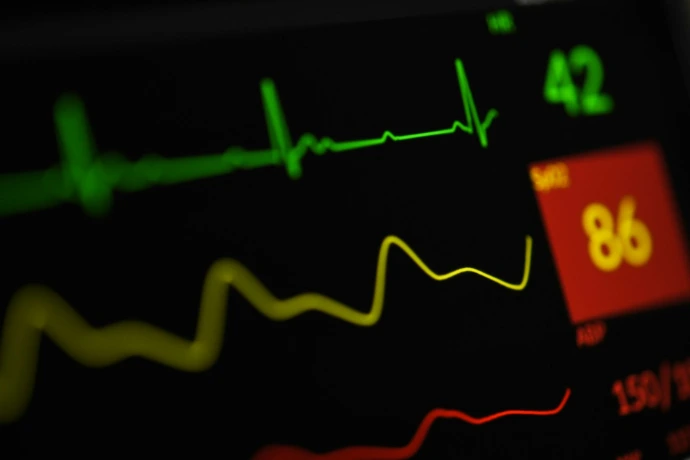
Special systems
Devices for newborns, patients with limited mobility, or for sports medicine. Portable wearables with continuous transmission to smartphones or central databases are also gaining importance.
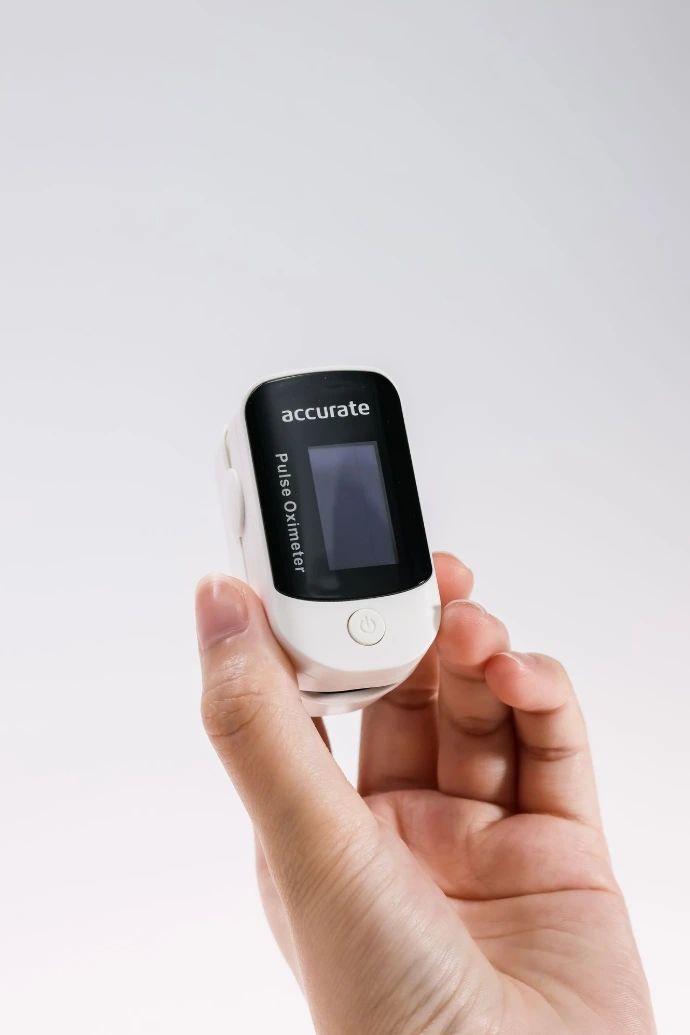
Finger pulse oximeters
Compact devices for home use. Quick to set up, but limited in accuracy and function.
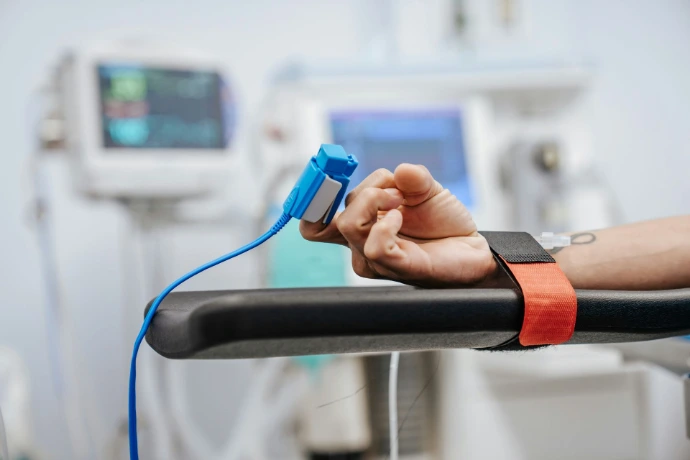
Stationary systems
Integrated into monitoring systems in the intensive care unit or operating room. Often with CO-oximetry and ventilation interfaces.
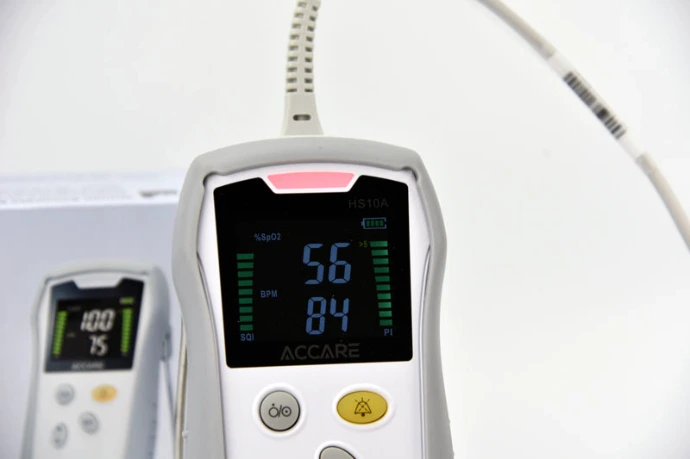
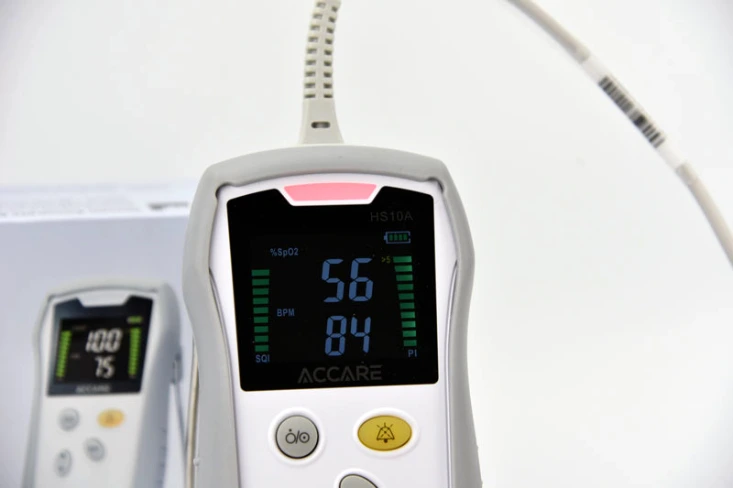
Handheld pulse oximeters
Have detached sensors and advanced features such as alarm limits, data storage, and multi-sensor capabilities. Ideal for clinics, nursing, and emergency services.
The main measurement methods at a glance
Below, we would like to give you a brief overview of the most important measurement methods.
CO-oximetry (multi-channel method)
CO-oximetry is an advanced measurement method that uses light with multiple wavelengths to differentiate between various types of hemoglobin:
COHb (carboxyhemoglobin):Binds carbon monoxide. Critical in cases of smoke inhalation.
MetHb (methemoglobin):Occurs in cases of poisoning or medication effects. Reduces oxygen transport.
Oxyhemoglobin (O₂Hb)andDeoxyhemoglobin (HHb)are still measured, but presented in a more differentiated way.
This procedure is primarily used in emergency medicine, in toxicological situations, and in anesthesia.
Dual-channel pulse oximetry (classic)
This method uses two light wavelengths – red (approximately 660 nm) and infrared (approximately 940 nm) – to determine the relative oxygen saturation in arterial blood. Oxyhemoglobin and deoxyhemoglobin absorb light to different extents. The sensor measures the periodic light absorption in sync with the heartbeat and calculates the SpO₂ from that.
Classic pulse oximetry is integrated into most portable pulse oximeters and provides a reliable assessment of oxygen supply under normal conditions.
Reflective vs. transmissive measurement
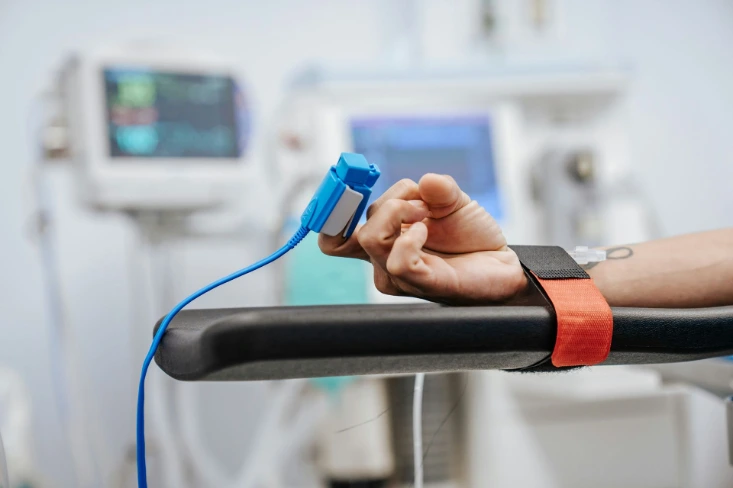
Transmissive sensors send light through a thinly translucent body part (e.g., finger, earlobe). Light absorption is measured on the opposite side.
Reflective sensors, on the other hand, analyze the reflected light, e.g., on the forehead or skin. This technique is particularly suitable in cases of poor peripheral circulation or in neonatology.
Additional parameters and their significance
What else can be measured and what do the individual parameters actually mean?
Perfusion index (PI)
The perfusion index describes the relative strength of the pulse at the measurement site. It helps assess local blood flow.
Normal:>1.0
Borderline:<0.5 may indicate vasoconstriction or hypovolemia
PVI (Pleth Variability Index)
PVI measures the fluctuation of pulse wave amplitude during breathing and provides indications of the patient's volume status.
Higher PVI may indicate volume deficit or dehydration.
Primarily used in anesthesia and intensive care.
Respiratory rate (RRp)
Some modern pulse oximeters calculate the respiratory rate based on the plethysmographic curve.
Normal values for adults:12–20 breaths/min
Deviations may indicate metabolic, respiratory, or neurological disorders.
Pulse rate (PR)
Heart rate is determined by pulse-synchronous light absorption.
Normal value for adults:60–100 bpm
Children:80–130 bpm (depending on age) A significantly elevated or very low pulse may indicate circulatory problems, stress, or arrhythmias.
Where are pulse oximeters used?
Pulse oximeters are used in nearly all medical fields. In emergency services, they assist in the initial assessment of shortness of breath, trauma, or shock. In hospitals, they are used for continuous monitoring of at-risk patients.
In nursing, they are used to detect early warning signs in chronic conditions such as COPD or heart failure. In anesthesia, they ensure oxygen supply during anesthesia.
Pulse oximeters also provide safety for patients in home settings: in cases of long COVID, chronic bronchitis, or for monitoring after infections.

Available accessories
The available accessories greatly enhance the utility and versatility of handheld pulse oximeters! Suitable accessories include:
Sensors for different age groups and measurement sites (finger, ear, toe, forehead)
Adhesive sensors for neonates
Extension cables, adapters, and chargers
Silicone protective covers with integrated stands
Software for data analysis and documentation
Advantages of pulse oximetry in everyday life
Pulse oximeters continuously provide information about health status and can save lives by timely detection of critical values. Their ease of use makes them accessible even to laypersons.
Professional devices offer additional safety features such as acoustic alarm limits, trend displays, or interfaces to documentation systems.
Pulse oximetry is also cost-effective, low-risk, and can be used in almost any environment – from general practitioner offices to mountain rescue operations.
Pulse oximeters are...
… versatile, life-saving tools in modern medicine. They not only measure SpO₂ and pulse rate but increasingly also parameters like PVI, Pi, and RRp, which provide valuable information about circulatory and respiratory status. Thanks to various measurement methods and designs, they can be individually adapted and widely used. Those who rely on high-quality devices and suitable sensors receive reliable data for informed decisions in clinical practice and preclinical care.
Are you currently looking for a pulse oximeter?
Visit our online shop and browse our current models.